Video hooks that stop the scroll: 12 openers for Shorts, TikTok and Reels
On a short video feed, the first line is the whole pitch. Here are twelve hook formulas that work for faceless videos, an example of each, and the openers that quietly lose viewers.
By the FacelessHype team
5 min read
Updated November 1, 2026
A hook is the first line and first picture of a video: the part that makes a stranger decide to stay instead of swiping. On Shorts, TikTok and Reels, the video starts playing on its own, so the hook is not part of the pitch. It is the pitch.
The platforms say so themselves. YouTube's Shorts guide tells creators to "Capture attention in the first few seconds to prevent viewers from scrolling." On TikTok, the Creator Rewards terms only count a view as qualified when someone watches for "five seconds or more". If your opening does not hold people for five seconds, the view does not count for that program at all.
What a good hook does
A strong hook does three things in one or two seconds:
- Makes a promise. The viewer knows what they will get if they stay.
- Opens a gap. There is a question in their head they want answered.
- Matches the video. The rest of the video pays off the promise. A hook that lies gets swipes later, and angry comments.
A creator interviewed on the YouTube Blog described a structure of "shock, intrigue, and satisfy": grab attention, build curiosity, then deliver. It is a useful frame for the formulas below.
12 hook formulas, with examples
Each one has a faceless example you could make today.
1. The impossible fact
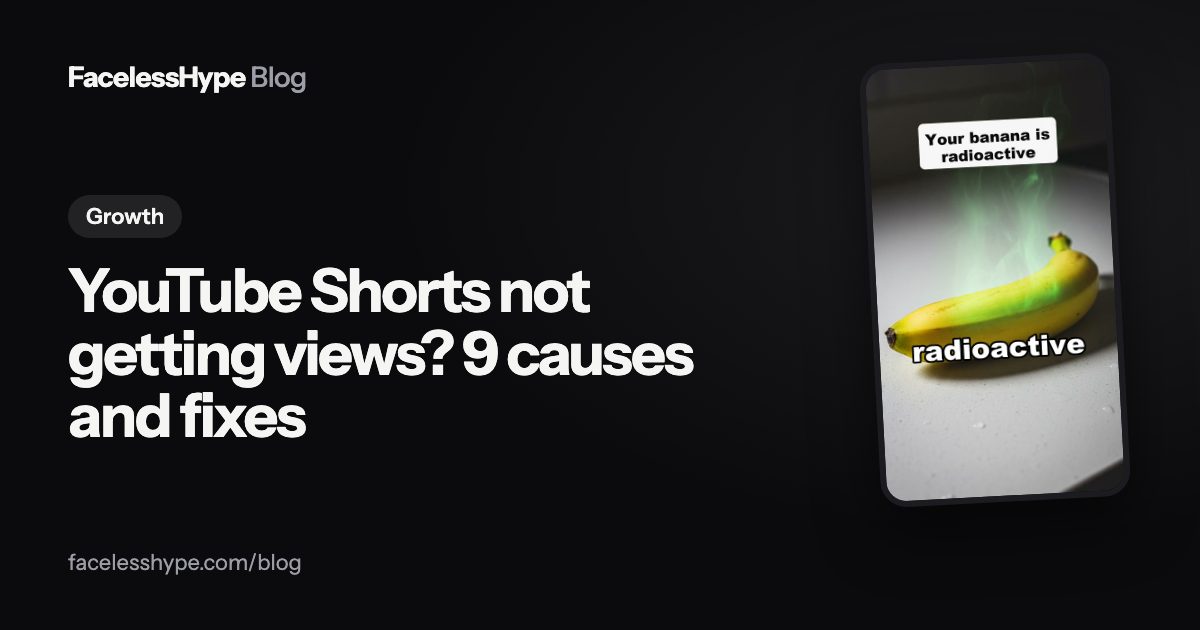
State something that sounds false but is true. "Bananas are slightly radioactive. Here is why you can still eat them."
2. The "what if"
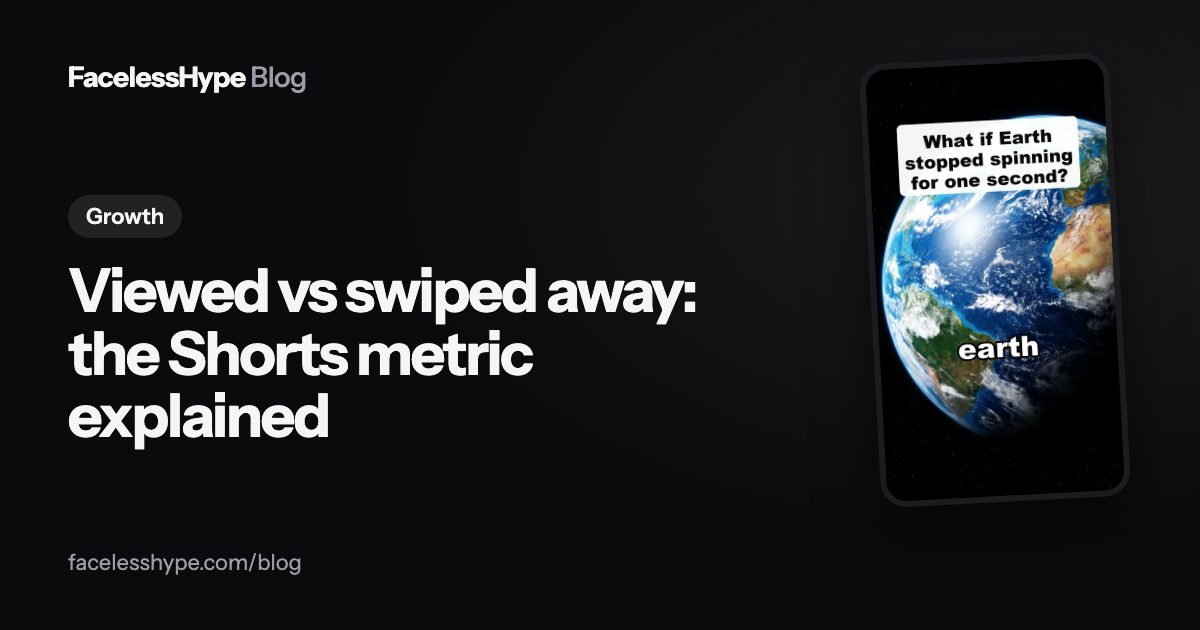
Ask a big question with a surprising answer. "What if the Earth stopped spinning for just one second?"
3. The time stamp
Drop the viewer into a specific moment. "At 3:07 AM, the doorbell camera caught something on the porch."
4. The countdown
Promise a number and a ranking. "Three things your body does when you hold in a sneeze. Number one is the scary one."
5. The wrong belief
Tell viewers something they believe is wrong. "You have been told the Great Wall is visible from space. It is not."
6. The stakes
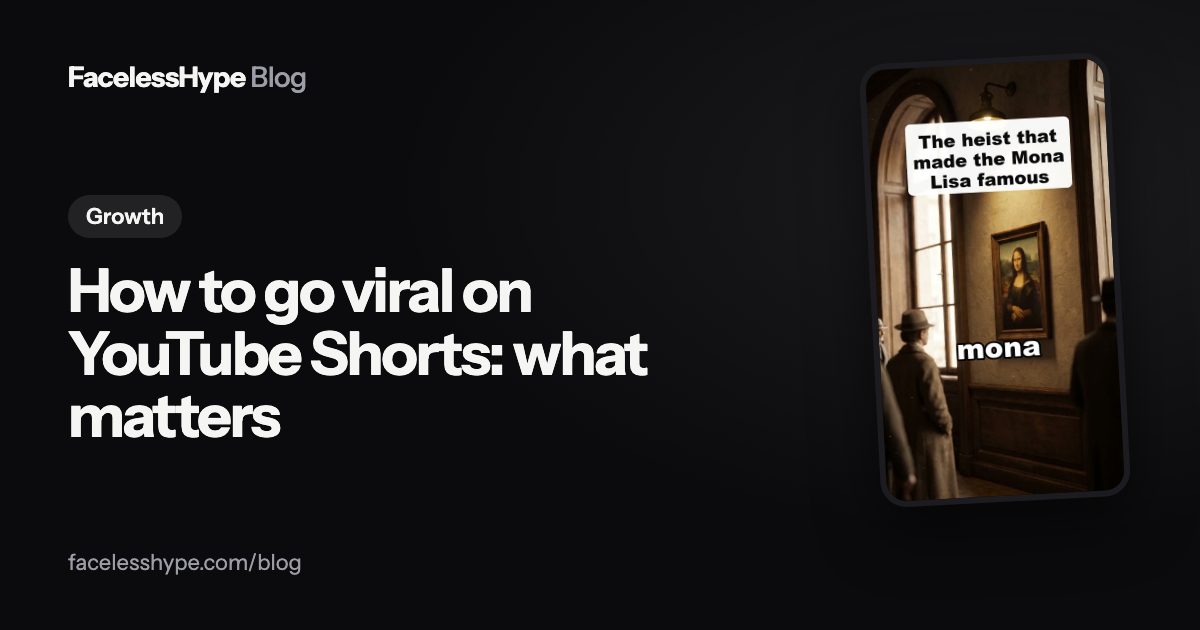
Start with what someone could lose. "He had one hour to return the painting, or the whole plan fell apart."
7. The direct question
Ask the viewer something they cannot answer yet. "Do you know why octopuses have three hearts?"
8. The cold open
Start in the middle of the action, explain later. "The eggs were numbered. All twelve of them. In my handwriting."
9. The reveal tease
Promise a reveal at the end. "The letter arrived 40 years late. What was inside changed everything."
10. The comparison
Put two things side by side that should not fit. "This war lasted shorter than your lunch break."
11. The rule
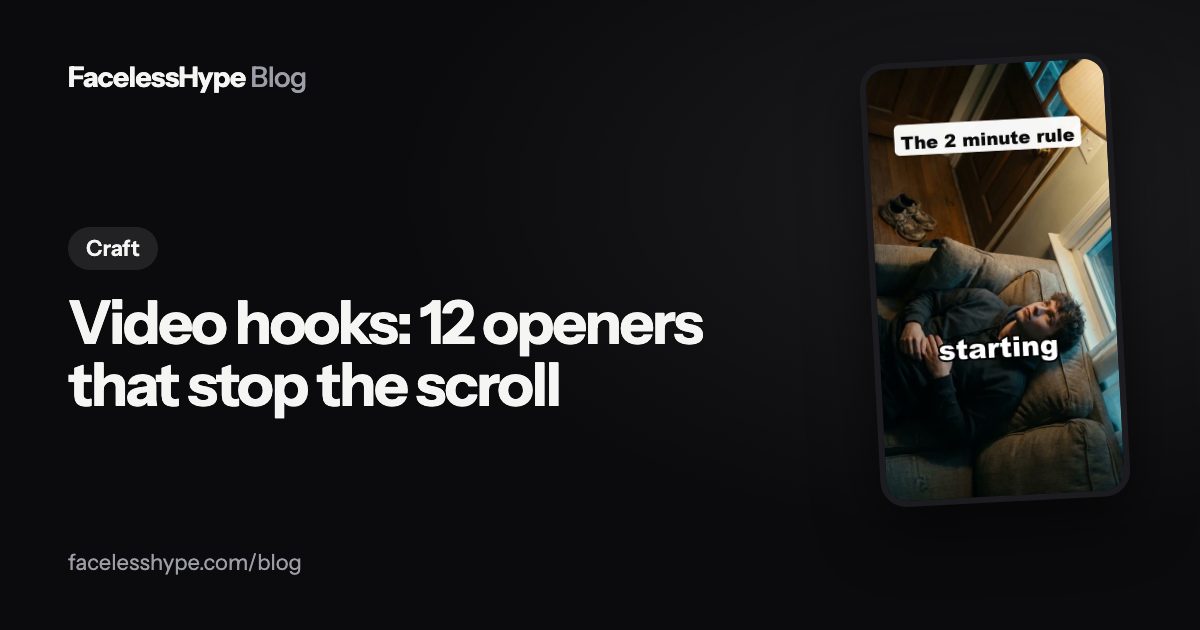
Offer a simple rule the viewer can use right away. "The two minute rule: if a habit takes less than two minutes, start it now."
12. The challenge
Invite the viewer to play along. "Only one in ten people get this riddle in five seconds. Go."
The visual half of the hook
The words are only half. The first frame needs to work too:
- Show the subject at once. If the story is about a doorbell camera, the first frame is the doorbell camera.
- Movement from frame one. A still opening frame looks like a paused video.
- Put the hook on screen in big text, so it works with the sound off.
- Keep the text short. Five to eight words. The narration can say more.
Openers that lose viewers
These are common, and they cost views quietly:
- Greetings. "Hey guys, welcome back to the channel." Nobody in the feed has been to your channel before.
- Slow context. "So, back in the early 1500s, in a part of Europe..." Start with the event, add the context after.
- Asking for a subscribe first. Earn it with the video, ask at the end if at all.
- A logo or intro animation. Two seconds of branding is two seconds of swiping.
- A hook the video does not pay off. It might win the first second, but viewers leave when they realise, and finish rate drops.
Clickbait versus a hook
The difference is simple: a hook makes a promise the video keeps. Clickbait makes a promise the video breaks.
This matters beyond viewer trust. YouTube's monetization policies list "deceptive or misleading imagery or narratives" among content that cannot earn. A dramatic but true hook is fine. A fake one is a risk.
How to test your hooks
- Write three hooks for every video idea before you make it, and pick the strongest.
- Read them out loud. If one makes you want to know the answer, use it.
- After posting, check how many viewers chose to keep watching in YouTube Analytics. Compare your best and worst Shorts side by side.
- Look at the first second of the winners. Which formula did they use? Use it again with new topics.
- Keep a swipe file of hooks that worked for you. After a month it will be your most useful tool.
For the rest of the video, our guide on how to go viral on YouTube Shorts covers keeping attention to the end, and how long a Short should be covers cutting a script down.
Hooks in FacelessHype
In FacelessHype, the first scene of every video is written as the hook, and you see it in the scene preview before anything is made. If it is not strong enough, change it before you make the video. Hook Lab writes five opening lines for your idea, each built on a different hook pattern, so you can pick the strongest, and the viral check flags a script with a weak first few seconds.
Every format on the formats page lists ideas to start with that fit the niche, and our YouTube Shorts script guide shows where the hook sits in a full script.
Quick answers
How long should a video hook be? One to three seconds of speech, or about 5 to 12 words. The first frame matters as much as the words.
Do hooks matter on long videos too? Yes. The first 30 seconds of a long video decide whether viewers stay, but you have a little more room to set up.
Can I reuse the same hook formula? Yes. Reusing a structure is fine. Reusing the same words on every video starts to look templated.
Sources
Platform rules change, so check the source before you rely on a figure.
- YouTube Blog (January 28, 2025): YouTube Shorts deep dive
- YouTube Blog (April 8, 2025): Your guide to getting started with YouTube Shorts
- TikTok Creator Rewards Program terms (last updated April 2025)
- YouTube Help: Channel monetization policies
Written by the FacelessHype team. FacelessHype is not affiliated with YouTube or TikTok. Nothing here is a promise of views or income.